Blog

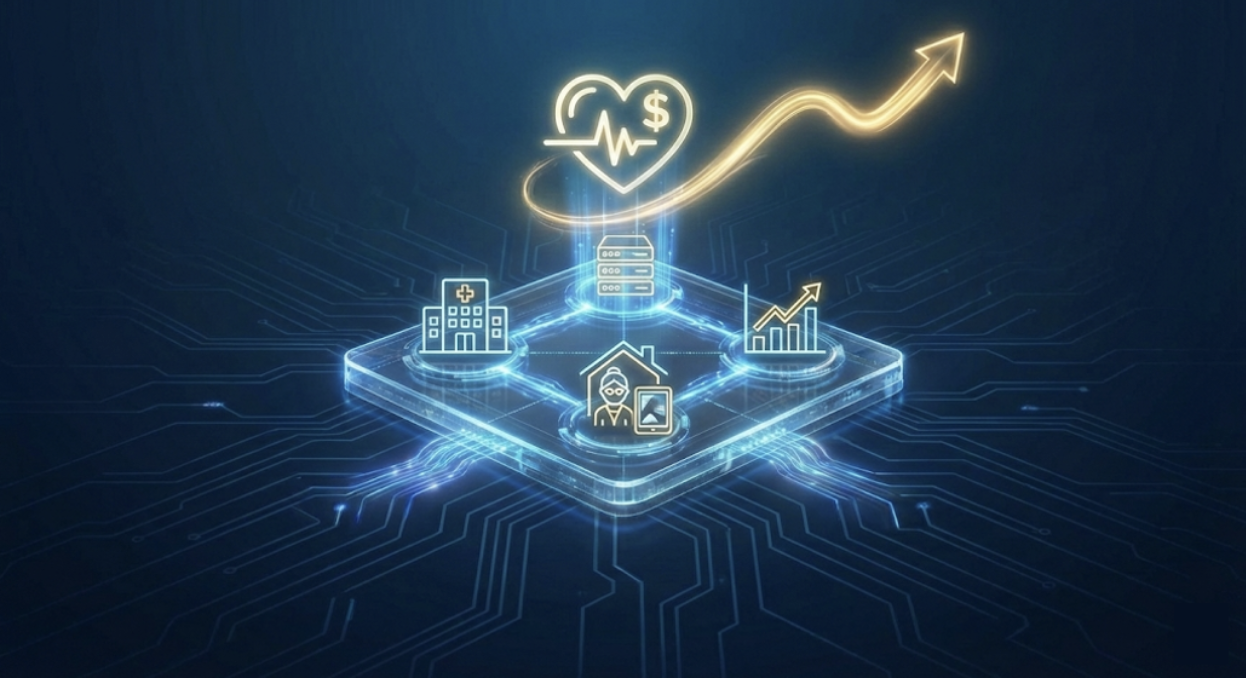
  • The $1 Trillion Opportunity: Why Digital Health is a Win-Win for the Entire Ecosystem

    The $1 Trillion Opportunity: Why Digital Health is a Win-Win for the Entire Ecosystem

    In our previous discussions, we explored the clinical and human impacts of the healthcare workforce shortage. But as we move into 2026, a new consensus is emerging among health systems and payers alike: digital health is the most powerful engine for financial sustainability we have ever seen.

    It is no longer about just buying software. It is about a fundamental shift in the economics of care – one that reduces the detective work for doctors, improves adherence for patients, and delivers massive ROI for health systems and insurers.

    Removing the Efficiency Tax on Clinicians

    Every minute a doctor spends as a “data detective” is a minute of lost productivity and revenue. Administrative waste – largely driven by fragmented data and manual workflows – costs the U.S. healthcare system an estimated $265.6 billion annually.

    By providing instant access to unified patient history and relevant insights, systems are seeing a dramatic shift:

    • Higher Patient Throughput: Clinicians spend less time clicking and more time treating.
    • Reduced Redundancy: Instant clarity prevents the “re-ordering” of expensive diagnostic tests that were already performed elsewhere.
    • Increased Revenue: Efficient documentation and AI-assisted coding can increase reimbursement by as much as $13,000 per clinician.

    Closing the $300 Billion Adherence Gap

    When patients leave the clinic, the treatment plan often falls apart. Medication non-adherence alone generates between $100 billion and $300 billion in avoidable healthcare expenses every year due to emergency treatments and prolonged hospital stays.

    The entire ecosystem benefits when we close this gap:

    • For Payers: Proactive adherence programs prevent the high-cost, acute events that drain balance sheets.
    • For Systems: Remote Patient Monitoring (RPM) has been shown to reduce hospital readmissions by nearly 50% to 76% in certain chronic populations.
    • For Patients: Better adherence leads to faster recovery times and higher quality of life.

    The Macro View: Healthspan as a GDP Engine

    The ultimate economic goal is to increase healthspan:the years people live free from chronic disease. This isn’t just a clinical metric; it’s a national economic imperative.

    When people remain healthy and positive contributors to the economy for longer, the gains are astronomical. Extending the healthy life expectancy of the U.S. population by just one year is projected to add $123 trillion to the U.S. GDP over the coming decades.

    A Unified Future

    Health systems, insurers, providers and patients are finally aligned. We are moving away from a labor-heavy, reactive model toward an AI-enabled, proactive platform. The results are clear:

    • Lower Unit Costs: Payers can deliver high-quality services at a lower cost per member.
    • Better Margins: Hospitals can manage larger populations with fewer in-person resources while maintaining quality.
    • Affordability: These efficiencies are the only way to make healthcare truly affordable for the American public in the long term.

    The Cognitive Load Revolution and Connected Care aren’t just clinical improvements – they are the blueprints for a more prosperous, sustainable nation.

    Sources 

  • The Revolving Door: Why Perfect Treatment Plans Fail (And How to Stop It)

    The Revolving Door: Why Perfect Treatment Plans Fail (And How to Stop It)

    In our previous discussions, we’ve focused on arming clinicians with the right tools – telehealth for reach, and unified data for insight. We’ve explored how to help the doctor make the perfect diagnosis and craft the perfect treatment plan in the clinic.

    But every clinician knows the sinking feeling that comes next.

    You discharge a patient with a solid plan. You’ve done your job. Then, three weeks later, their name pops up on the admissions list again. They are back in the ER, their condition has deteriorated, and you are back to square one.

    This “revolving door” of readmissions and prolonged recoveries is one of the greatest sources of strain on the healthcare workforce. It means clinicians are constantly fighting the same fires, treating preventable relapses instead of moving forward.

    To reduce the burden on our workforce, we have to ensure that treatment is effective the first time. And that means we must fundamentally change what happens in the space between visits.

    The “Black Hole” Between Visits

    Medicine is continuous. Diseases like diabetes, heart failure, or post-surgical recovery don’t take days off. Yet, our care model remains stubbornly episodic.

    We see a patient for 20 minutes, and then they disappear into a “black hole” for three months.

    In that black hole, reality sets in. Medication regimens are confusing. Side effects are frightening. Lifestyle changes feel impossible. The flawless plan crafted in the sterile environment of the clinic falls apart in the messy reality of the patient’s living room.

    When a patient “fails” a treatment plan, it’s rarely because they don’t want to get better. It’s because the gap between the plan and their daily life is too wide to bridge alone.

    Moving from Snapshots to a Video Stream

    To stop the revolving door, we must shift from episodic snapshots of health to continuous visibility. We need to extend the care team’s reach into the home, not just to monitor, but to actively support adherence and intervene early.

    This isn’t about hovering over patients; it’s about providing a digital safety net.

    Tools for Adherence, Not Surveillance

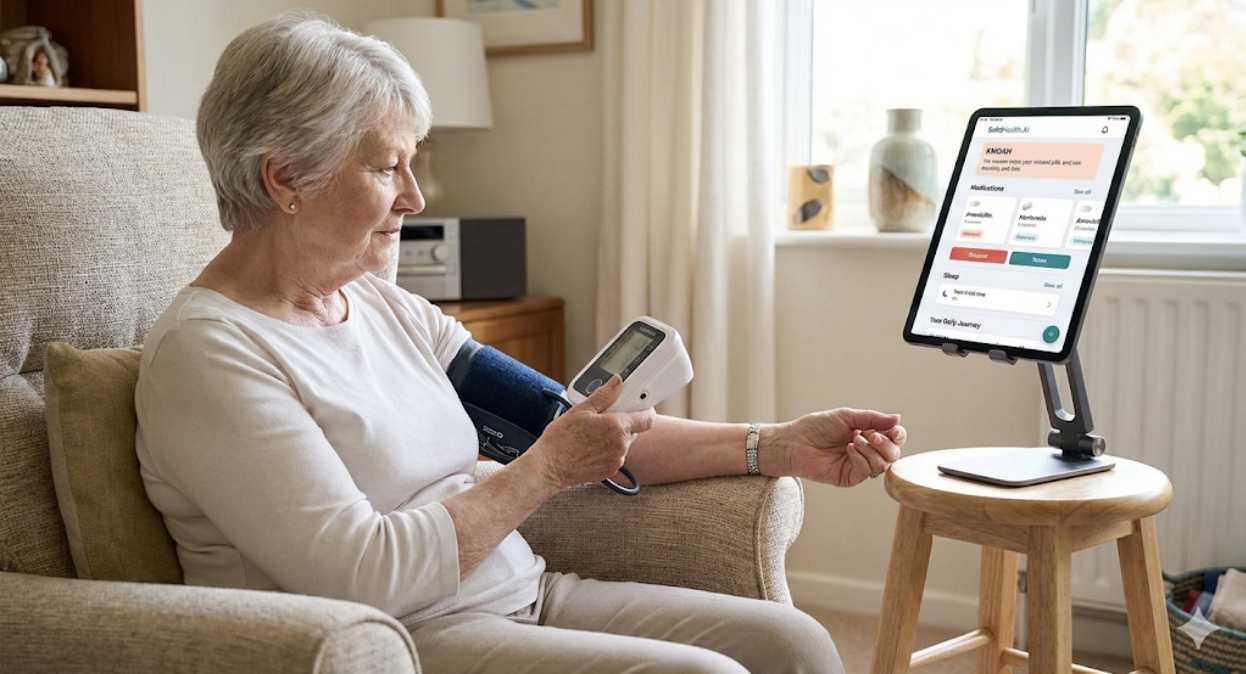
    We cannot hand a 75-year-old patient five new pill bottles and a stack of paper instructions and expect perfect execution. Clinicians need digital tools that turn complex care plans into manageable daily actions for the patient.

    • Beyond the Pillbox: Smart medication adherence tools that provide reminders, track intake, and flag missed doses to the care team before a pattern forms.
    • Guided Recovery: Digital pathways for acute-care patients that deliver the right education at the right time: “Today, your incision should look like this; if it looks redder, click here.”

    When patients have the tools to understand what to do and why they are doing it, adherence transforms from a struggle into a solvable routine.

    Proactive Intervention: Catching the Spark Before the Fire

    The most exhausting part of a clinician’s job is reactive, crisis-mode medicine – dealing with the heart failure exacerbation at 3:00 AM because the warning signs were missed for a week.

    Continuous connection allows us to move to exception-based management.

    Instead of waiting for a crisis, smart systems can analyze daily biometrics (weight, blood pressure, symptom surveys) and identify subtle deviations.

    • The Old Way: The patient gains 5 pounds in a week, notices increased swelling, tries to sleep it off, and ends up in the ER with acute decompensation.
    • The New Way: The system notes a 2-pound gain on day two. It automatically triggers a ping to the care team. A nurse conducts a brief telehealth check-in, adjusts a diuretic dosage over the phone, and the crisis is averted.

    Reducing the Burden by Improving Outcomes

    It sounds counterintuitive: “Won’t monitoring patients at home create more work for clinicians?”

    If done poorly, yes. But if done correctly, using technology to filter noise and surface only actionable insights, it creates vastly less work in the long run.

    Every readmission prevented is hours of intake paperwork, diagnostic testing, and acute care management saved. Every prolonged recovery shortened is capacity returned to the system. This will also result in substantial positive impact to Healthcare Economics, a large topic in itself. Will cover that aspect in a subsequent post.

    The ultimate tool for reducing workforce burnout isn’t just efficiency; it’s efficacy. It’s the profound satisfaction that comes when a clinician knows the plan they made is working, the patient is recovering, and they won’t be seeing them in the ER next month.

    We have the technology to close the gap between visits. By doing so, we don’t just help patients heal faster – we give our exhausted workforce a chance to breathe.

  • Stop Drowning Your Clinicians in Data: The Cognitive Load Revolution

    Stop Drowning Your Clinicians in Data: The Cognitive Load Revolution

    In my earlier post, we looked at the math: we have a shrinking workforce facing a massive demand for care. But the crisis isn’t just about a lack of bodies; it’s about a loss of time.

    Today, the average U.S. physician spends nearly six hours in the Electronic Health Record (EHR) for every eight hours of scheduled patient time. Much of that time is spent not on treating the patient, but on being a detective.

    The Scavenger Hunt for Context

    The data overload crisis didn’t start with telehealth or wearables – it’s been baked into the system for years. Doctors are forced to play “private investigator” across a fragmented landscape:

    • The Fragmented History: A patient’s history is often scattered across three different clinics, two hospital systems, and a decade-old PDF.
    • The Manual Search: Finding out if a patient actually had that colonoscopy or what their last A1C was often requires digging through “inbox” messages or calling a different facility.
    • The Cognitive Burden: Every minute a doctor spends clicking through tabs to find a lab result is a minute they aren’t thinking about the meaning of that result.

    Shifting from “Data Perusal” to “Clinical Insight”

    We have reached a tipping point where healthcare produces more data than any human can realistically process. In 2026, the goal of technology is no longer just to “store” medical history; it is to synthesize it.

    To save our clinicians, we must move from a system of raw data to one of instant clarity. 

    Longitudinal Records (The End of the Hunt)

    Imagine a world where the “medical history” isn’t a collection of disparate folders, but a single, unified timeline that follows the patient. When a clinician opens a chart, they shouldn’t see a list of 500 documents; they should see a synthesized clinical summary that highlights the most relevant trends instantly.

    AI as the “Clinical Assistant”

    We are finally seeing the rise of tools that don’t just “chat” but actually do. AI-driven insights can now reconcile disparate data points – connecting a weight gain recorded at home to a medication change from a specialist three weeks ago – and surface that connection before the doctor even has to look for it.

    The Goal: Clinicians should spend zero mental energy on “gathering” and 100% on “deciding.”

    Treatment Over Investigation

    When a doctor has to spend 15 minutes of a 20-minute appointment investigating what happened since the last visit, the patient loses. The “human” part of medicine – the eye contact, the empathy, the nuanced discussion about treatment – is what gets sacrificed first.

    By automating the “detective work,” we give the doctor back their most valuable asset: presence.

    The Bottom Line

    The workforce crisis is as much about efficiency as it is about personnel. If we continue to ask our doctors to spend half their lives as data-entry clerks and investigators, we will continue to lose them to burnout.

    The “Cognitive Load Revolution” isn’t just a tech trend; it is a rescue mission for the soul of medicine.

  • America’s Healthcare Workforce Shortage: The Crisis Behind the Crisis

    America’s Healthcare Workforce Shortage: The Crisis Behind the Crisis

    The United States is facing one of the most profound healthcare challenges of our time, and it has nothing to do with new diseases or emerging pathogens. It is the simple, unavoidable reality that we do not have enough clinicians to care for the population we have today, let alone the one we’ll have tomorrow.

    This shortage isn’t a future threat; it is a present reality. It is reshaping every facet of the healthcare system: access, safety, quality, cost, and the daily experience of both patients and clinicians. To move toward a model of proactive, digitally supported care, we must first confront the scale of this crisis.

    This is an excellent way to ground your argument in reality. The data for 2026 confirms that we are no longer “approaching” a crisis—we are living through a structural realignment of the American healthcare workforce.

    The Math of a Shrinking Workforce: A Tipping Point

    The math is no longer just “stark”; it’s a deficit that traditional recruitment cannot solve. As we enter 2026, the gap between the care we need and the people available to provide it has reached a critical threshold.

    The Physician Deficit

    According to the latest Association of American Medical Colleges (AAMC) projections, the U.S. faces a shortage of up to 86,000 physicians by 2036. This is not a distant problem: as of 2025, over 35% of active physicians reported they are considering leaving medical practice entirely within the next year, citing burnout and administrative fatigue as their primary drivers.

    • Specialty Crises: The shortage is most acute in Primary Care (a projected deficit of 20,200 to 40,400) and Surgical Specialties.
    • The Retirement Wave: Nearly 20% of the current physician workforce is 65 or older, meaning a massive “brain drain” is imminent.

    The Nursing Cliff

    The nursing sector is experiencing its most significant upheaval in four decades.

    • The Vacancy Gap: Projections for 2025–2026 show a deficit of over 500,000 Registered Nurses (RNs) across the U.S.
    • The Retirement Surge: Approximately 600,000 “Baby Boomer” RNs are expected to retire by 2030.
    • The Pipeline Problem: In 2023-2024, U.S. nursing schools were forced to turn away over 65,000 qualified applicants because there simply weren’t enough faculty or clinical sites to train them.

    The Geography of Access

    The Health Resources and Services Administration (HRSA) highlights a deepening divide. While urban centers struggle, non-metropolitan areas face a projected 60% physician shortage compared to just 10% in cities. In these regions, “access to care” has become a theoretical concept rather than a practical reality.

    Burnout: From Resilience to Survival

    The workforce shortage isn’t just about numbers; it’s about human exhaustion.

    Clinicians are carrying heavier caseloads, managing more administrative burden, and navigating increasingly complex care needs. According to 2025 surveys, 56% of nurses report symptoms of high-level burnout, characterized by emotional exhaustion and “survival mode” thinking.

    This cycle is self-perpetuating:

    • Departure: Burnout leads to early retirements and career changes.
    • Load: Every departure increases the caseload for those who remain.
    • Safety: Strained clinicians have less time for the “soft” signs of patient deterioration, leading to more reactive, high-stakes care.

    The Most Vulnerable Bear the Brunt

    While the shortage affects everyone, older adults and those with chronic conditions feel it most acutely. These patients require frequent monitoring and timely interventions—the very things a strained system struggles to provide.

    The visible consequences include:

    • Longer wait times and shorter consultation windows.
    • Delayed follow-ups and reduced continuity of care.
    • An increase in preventable hospitalizations because small issues weren’t caught in time.

    Telehealth: The Promising Scalable Path Forward

    We cannot train our way out of this. We cannot hire our way out. The only sustainable path is to augment the workforce with technology that acts as a force multiplier.

    Telehealth is now utilized at a rate 38 times higher than in 2019, but its role has shifted. It is no longer just for “urgent care” sniffles; it is the backbone of chronic disease management.

    • Force Multiplication: One clinician can monitor a high-acuity “Virtual Ward” of 50 patients across three different states.
    • Cognitive Support: AI-driven tools can now filter the “noise” of daily health data, surfacing only the patients who truly need a human intervention today.

    From Episodic to Continuous Visibility

    This shortage creates a dangerous “Clarity Gap.” When a primary care physician is booking six months out, the traditional episodic model of care breaks.

    • Wait Times: Average wait times for new patient appointments in some specialties have increased by 24% since 2022.
    • The Safety Net: Without continuous visibility, small health changes in older adults go unnoticed until they become expensive, traumatic Emergency Room visits.

    The Future: Supporting the Workforce We Have

    The path forward is to augment our existing workforce with technology that reduces cognitive load and increases visibility. We need tools that:

    • Surface early signs of deterioration before a crisis occurs.
    • Unify data across systems to give telehealth providers instant context.
    • Simplify care plans to improve patient adherence and reduce administrative friction.

    The Bottom Line

    The healthcare workforce shortage is a crisis of clarity. A system built on daily insight and AI-guided support doesn’t just help patients—it protects clinicians. It makes the profession sustainable again.

    The future of healthcare isn’t about replacing people; it’s about empowering them to do what they do best, even in the face of unprecedented demand.

    Sources:

    HRSA (Health Resources and Services Administration), “Health Workforce Projections” (2025).

  • CMS’s ACCESS Model: A Turning Point for Digital, Proactive Care

    CMS’s ACCESS Model: A Turning Point for Digital, Proactive Care

    Healthcare in the United States is undergoing one of the most significant shifts in decades. For years, the system has struggled with rising costs, clinician shortages, fragmented data, and a growing population of older adults with complex needs. The traditional, episodic model of care simply cannot keep up.

    CMS’s new ACCESS model represents a decisive response to these pressures and a clear signal that the future of healthcare must be proactive, coordinated, and digitally enabled. For organizations building the next generation of care experiences, ACCESS isn’t just a policy update. It’s a roadmap.

    To understand why this matters, and why it aligns so closely with the mission of SolidHealth.AI, we need to look at what ACCESS stands for and what it demands from the healthcare ecosystem.

    What ACCESS Stands For

    ACCESS is an acronym that captures the core pillars CMS believes will define the future of care:

    • Accountability
    • Coordination
    • Care Integration
    • Equity
    • Safety
    • Simplicity

    Each pillar reflects a shift away from episodic, reactive care and toward a model where people receive continuous support, clinicians have better context, and technology plays a central role in bridging gaps.

    Let’s break down what each pillar means in practice — and why it matters now.

    Accountability: Better outcomes through continuous visibility

    ACCESS emphasizes accountability not as punishment, but as clarity. Providers are expected to understand what’s happening with their patients between visits, not just during them.

    This requires:

    • Real‑time insight into health changes
    • Early detection of risk
    • Continuous monitoring of adherence
    • Clear documentation of interventions

    In other words, accountability depends on daily clarity – the very foundation SolidHealth.AI is built on.

    Coordination: Care teams working from the same picture

    Fragmentation is one of the biggest drivers of poor outcomes. ACCESS pushes the system toward coordinated care where:

    • Clinicians share context
    • Telehealth teams have the same information as in‑person teams
    • Caregivers are included
    • Transitions between settings are seamless

    Coordination is impossible without unified data. ACCESS makes that expectation explicit.

    Care Integration: Bringing physical, behavioral, and social care together

    ACCESS recognizes that health is not siloed. Physical health, mental health, and social needs are deeply interconnected.

    Integrated care requires:

    • A single view of the person
    • Shared care plans
    • Cross‑disciplinary communication
    • Tools that surface the right information at the right time

    This is where AI‑driven context becomes essential.

    Equity: Ensuring every person receives timely, high‑quality care

    ACCESS places equity at the center of care delivery. This means:

    • Reducing disparities in access
    • Supporting rural and underserved communities
    • Making telehealth a core part of the care model
    • Ensuring older adults and those with chronic conditions aren’t left behind

    Digital tools are no longer optional – they are the mechanism through which equity becomes achievable.

    Safety: Better decisions through better information

    Safety is not just about avoiding harm. It’s about enabling clinicians to make confident decisions with complete context.

    ACCESS emphasizes:

    • Early identification of deterioration
    • Medication safety
    • Clear escalation pathways
    • Reducing preventable hospitalizations

    Safety improves dramatically when clinicians have real‑time, unified insight into a person’s health – something the current system rarely provides.

    Simplicity: Reducing burden for both patients and clinicians

    Healthcare is too complex. ACCESS calls for simplicity in:

    • Care plans
    • Communication
    • Technology
    • Navigation
    • Documentation

    Simplicity is not about reducing care – it’s about reducing friction. It’s about making the right action, the easy action.

    Why ACCESS Is a Turning Point

    ACCESS is more than a policy framework. It’s a recognition that the old model of care is no longer sustainable.

    The pressures are clear:

    • A rapidly aging population
    • A shrinking clinical workforce
    • Rising chronic disease burden
    • Increasing demand for telehealth
    • Fragmented data across systems
    • Caregivers overwhelmed and unsupported

    ACCESS responds to these realities by pushing the system toward a model where continuous insight, digital tools, and coordinated care are the norm.

    This is not incremental change. It’s a structural change.

    ACCESS and the Rise of Digital, Proactive Care

    To meet ACCESS expectations, organizations must adopt tools that:

    • Provide daily visibility into patient health
    • Support telehealth teams with unified context
    • Simplify care plans and adherence
    • Enable early intervention
    • Reduce clinician burden
    • Empower individuals to take timely action

    This is exactly the gap SolidHealth.AI was built to fill.

    ACCESS doesn’t just validate the need for proactive, AI‑supported care — it accelerates it.

    Why SolidHealth.AI Is Aligned With ACCESS

    SolidHealth.AI’s core principles map directly to ACCESS:

    • Daily clarity → Accountability
    • Unified patient context → Coordination & Safety
    • AI‑guided insights → Care Integration
    • Telehealth‑ready workflows → Equity
    • Simple, actionable guidance → Simplicity

    ACCESS is the policy framework. SolidHealth.AI is the practical implementation.

    The future is proactive, continuous, and digitally enabled

    ACCESS marks a shift toward a healthcare system where:

    • People understand their health every day
    • Clinicians have the context they need
    • Telehealth is fully integrated
    • Care plans are simple and actionable
    • Problems are caught early
    • Independence lasts longer

    This is the future SolidHealth.AI is building –  a future where clarity replaces confusion, where action replaces hesitation, and where technology finally supports the kind of care people deserve.

  • The New Standard of Care: Why Everyone Deserves Daily Health Clarity

    The New Standard of Care: Why Everyone Deserves Daily Health Clarity

    For most of our lives, we move through the world with a quiet uncertainty about our health. We wait for symptoms to appear, for appointments to open up, for lab results to come back. We hope nothing serious is happening beneath the surface, but we rarely know for sure.

    In almost every other part of life, clarity is normal. We check our bank balance instantly. We track packages in real time. We know the weather days in advance. Yet when it comes to our health—the very thing that shapes our independence, our longevity, and our ability to care for the people we love—we’re still operating with limited visibility.

    That gap between what we need to know and what we actually know is one of the most overlooked problems in modern healthcare. And it’s time for a new standard: daily health clarity.

    The weight of not knowing

    People don’t delay care because they’re careless. They delay care because they’re unsure.

    Unsure whether a symptom matters.

    Unsure whether a medication is working.

    Unsure whether they’re trending toward stability or risk.

    Unsure whether they’re doing enough to stay healthy and independent.

    This uncertainty creates hesitation. Hesitation leads to missed preventive care, avoidable hospitalizations, and a growing sense of anxiety—especially for older adults and those managing chronic conditions.

    Uncertainty isn’t just uncomfortable. It’s harmful.

    A system built for episodes, not everyday life

    Traditional healthcare was designed for moments, not continuity. You see a clinician when something goes wrong. You get labs once or twice a year. You receive instructions you’re expected to follow without feedback or reinforcement.

    That model made sense when information was scarce and technology was limited. But today, people live with dynamic health needs, clinicians are stretched thin, and policy models like CMS’s ACCESS are pushing the system toward proactive, coordinated, tech‑enabled care.

    The world has changed. Our approach to care must change with it.

    Clarity turns intent into action

    Most people want to do the right thing for their health. What they lack isn’t motivation—it’s clarity.

    When people understand their health every day, everything becomes easier:

    • Clarity reduces fear. When you know what’s happening, you don’t have to imagine the worst.
    • Clarity builds confidence. You can see whether your actions are making a difference.
    • Clarity enables timely action. You know when something needs attention now versus later.
    • Clarity strengthens relationships. Individuals, caregivers, and clinicians can communicate from the same shared picture.

    Most importantly, daily clarity prevents small issues from becoming crises. It supports adherence, encourages healthier routines, and helps people stay independent for longer. It transforms healthcare from something reactive into something empowering.

    Technology has finally caught up

    For the first time, we have the tools to give people what they’ve always deserved: a simple, unified understanding of their health.

    Advances in AI, telehealth, remote monitoring, and data unification make it possible to translate complex medical information into clear, actionable insight—not once a year, but every day.

    This isn’t about replacing clinicians. It’s about:

    • Giving clinicians the context they need to deliver safe, confident care
    • Giving individuals and families the clarity they need to stay ahead of problems
    • Making it easier for everyone involved to see the same story, not fragments

    Daily health clarity is no longer a futuristic idea. It’s a practical, achievable standard.

    A future built on proactive care

    CMS’s ACCESS model signals a shift toward prevention, coordination, and continuous insight. Daily health clarity is the foundation that makes this shift real.

    With daily clarity:

    • Interventions can happen earlier
    • Telehealth becomes more effective and safer
    • Clinician burden is reduced through better context
    • Aging in place becomes more realistic and sustainable

    It aligns with where policy is going, where technology is capable of going, and where people desperately need healthcare to go.

    What SolidHealth.AI stands for

    At SolidHealth.AI, we believe clarity is a right, not a privilege. Every person—regardless of age, condition, or background—should wake up each day with a clear understanding of their health.

    Not a dashboard full of numbers.

    Not a stack of disconnected reports.

    But simple, meaningful insight that helps them take the right actions at the right time.

    Clarity that reduces fear.

    Clarity that strengthens families.

    Clarity that empowers clinicians.

    Clarity that supports independence.

    Daily health clarity isn’t just a feature. It’s the foundation of a more humane, proactive, and effective healthcare system.

    The new standard begins now

    The old model—episodic, reactive, confusing—is fading. A new model—continuous, proactive, empowering—is emerging.

    People deserve to understand their health every day. Clinicians deserve tools that lighten their cognitive load. Caregivers deserve visibility and peace of mind.

    Daily health clarity is how we get there.

    And this is only the beginning.

  • The Hidden Cost of Health Confusion

    The Hidden Cost of Health Confusion

    Health confusion is one of the most pervasive and underestimated problems in modern healthcare. It rarely makes headlines, yet it quietly shapes outcomes every single day. When people don’t understand what’s happening with their health, they hesitate, delay, or disengage. And those small moments of uncertainty ripple outward into consequences that affect individuals, families, clinicians, and the entire healthcare system.

    Confusion is the invisible barrier to better health

    We often talk about the cost of chronic disease, the cost of hospitalizations, or the cost of aging. But beneath all of those is a more fundamental issue: the cost of not knowing.

    Most people want to take care of themselves. They want to follow their care plans, take their medications, and stay ahead of problems. But the reality is that healthcare is complex, fragmented, and difficult to navigate. Even highly educated, motivated individuals struggle to make sense of their health information.

    Confusion shows up in subtle but powerful ways:

    • Not knowing whether a symptom is serious
    • Not understanding how medications interact
    • Not remembering what a clinician said during a rushed visit
    • Not being sure whether a care plan is working
    • Not knowing what to do next

    These moments of uncertainty accumulate. They create hesitation. And hesitation is often the difference between early intervention and a preventable crisis.

    When people don’t understand, they don’t act

    Health confusion doesn’t just create emotional stress — it directly affects behavior.

    When people lack clarity, they are more likely to:

    • Skip preventive care
    • Delay reporting symptoms
    • Miss medications
    • Ignore early warning signs
    • Avoid follow‑up appointments
    • Wait until problems become urgent

    This isn’t a matter of willpower. It’s human nature. When something feels overwhelming or unclear, we push it aside. We hope it resolves on its own. We tell ourselves we’ll deal with it later.

    But “later” is often too late.

    The emotional toll is real

    Confusion creates a constant, low‑grade anxiety that many people carry silently. They may not articulate it, but they feel it:

    • “I don’t know what’s going on with my health.”
    • “I’m not sure if I’m doing the right things.”
    • “I hope nothing is wrong.”
    • “I don’t want to bother my doctor.”

    This emotional burden affects sleep, mood, relationships, and overall quality of life. It also affects caregivers, who often feel responsible for interpreting information they were never trained to understand.

    Clarity isn’t just a clinical need — it’s an emotional one.

    Clinicians feel the cost too

    Health confusion doesn’t only impact patients. It adds friction and risk to every part of clinical care.

    When people don’t understand their health:

    • Clinicians spend more time re‑explaining information
    • Telehealth visits become less efficient
    • Care plans are harder to follow
    • Decisions are made with incomplete context
    • Preventable complications increase workload
    • Burnout accelerates

    In a system already strained by workforce shortages, confusion becomes a multiplier of stress.

    The financial cost is staggering

    Confusion drives unnecessary utilization across the system:

    • Avoidable ER visits
    • Preventable hospitalizations
    • Duplicated tests
    • Poor medication adherence
    • Complications from unmanaged conditions

    Billions of dollars each year are spent not because people don’t care about their health, but because they didn’t understand what was happening soon enough to act.

    Clarity is not just a human need — it’s a financial imperative.

    Why this problem persists

    Health confusion persists because the system was never designed for continuous understanding. It was built for episodic care, fragmented data, and one‑way communication. People receive instructions without reinforcement, information without context, and diagnoses without daily guidance.

    Even the most dedicated clinicians can’t fill the gaps created by a system that only checks in a few times a year.

    The result is predictable: people are left to navigate their health alone, with limited visibility and no real‑time support.

    Daily clarity changes everything

    When people understand their health every day, confusion dissolves. Decisions become easier. Adherence improves. Care teams gain better context. Problems are caught earlier. Anxiety decreases. Independence lasts longer.

    Daily clarity turns healthcare from something reactive into something proactive.

    It gives people:

    • A sense of control
    • Confidence in their decisions
    • Early awareness of changes
    • A clear path forward
    • A reason to act today, not tomorrow

    And it gives clinicians the visibility they need to deliver safer, more efficient care.

    The path forward

    The hidden cost of health confusion is too high — emotionally, clinically, and financially. But it doesn’t have to be this way. Technology has reached a point where daily clarity is not only possible, but essential.

    As CMS pushes the system toward proactive, coordinated care through models like ACCESS, clarity becomes the foundation that makes everything else work.

    People can’t follow care plans they don’t understand.

    Clinicians can’t make confident decisions without context.

    Families can’t support loved ones when they’re in the dark.

    Daily health clarity is the antidote to confusion — and the key to better outcomes for everyone.

  • Founders’ Note

    Founders’ Note

    It started with our families.

    Both of us, Rishik and Rahul, have walked the long, uncertain road of caring for parents and loved ones. We’ve felt the weight of confusion in the healthcare maze, the frustration of watching important details slip away, and the helplessness of only acting when a crisis left us no choice.

    That experience lit a fire. We realized that every day, people generate mountains of health data – from doctor visits and lab results to wearables and daily habits. Yet there’s no single place to bring it all together, to see the full picture, and to act before small issues become big ones.

    As we dug deeper, the truth became clear: care gaps aren’t just a consumer problem. They exist everywhere in the system. When you meet a new provider, they rarely have your complete history. When you move between doctors, specialists, therapists, or hospitals, information slips through the cracks. And those cracks are where health issues grow, turning manageable problems into chronic conditions, and interrupting lives that deserve continuity!

    We knew it didn’t have to be this way.

    SolidHealth.AI was born to close those gaps and deliver care continuity.

    Our Promise

    • Clarity every day — a unified view of your wellness status.
    • Guidance you can trust — grounded in science, tailored to you.
    • A true health concierge — helping you navigate, decide, and get things done.
    • Connection that matters — keeping your care team in the loop, on your terms.

    Our Mission & Vision

    Our mission is simple: no one should ever “fly blind” when it comes to their health.

    Our vision is a world where every person — regardless of age, background, or health status — has the clarity and support to live a longer, healthier, more empowered life.

    We built SolidHealth.AI for our families. Now, we’re here to build it for yours.

    Rishik and Rahul

    Cofounders – SolidHealth.AI