In our previous discussions, we’ve focused on arming clinicians with the right tools – telehealth for reach, and unified data for insight. We’ve explored how to help the doctor make the perfect diagnosis and craft the perfect treatment plan in the clinic.
But every clinician knows the sinking feeling that comes next.
You discharge a patient with a solid plan. You’ve done your job. Then, three weeks later, their name pops up on the admissions list again. They are back in the ER, their condition has deteriorated, and you are back to square one.
This “revolving door” of readmissions and prolonged recoveries is one of the greatest sources of strain on the healthcare workforce. It means clinicians are constantly fighting the same fires, treating preventable relapses instead of moving forward.
To reduce the burden on our workforce, we have to ensure that treatment is effective the first time. And that means we must fundamentally change what happens in the space between visits.
The “Black Hole” Between Visits
Medicine is continuous. Diseases like diabetes, heart failure, or post-surgical recovery don’t take days off. Yet, our care model remains stubbornly episodic.
We see a patient for 20 minutes, and then they disappear into a “black hole” for three months.
In that black hole, reality sets in. Medication regimens are confusing. Side effects are frightening. Lifestyle changes feel impossible. The flawless plan crafted in the sterile environment of the clinic falls apart in the messy reality of the patient’s living room.
When a patient “fails” a treatment plan, it’s rarely because they don’t want to get better. It’s because the gap between the plan and their daily life is too wide to bridge alone.
Moving from Snapshots to a Video Stream
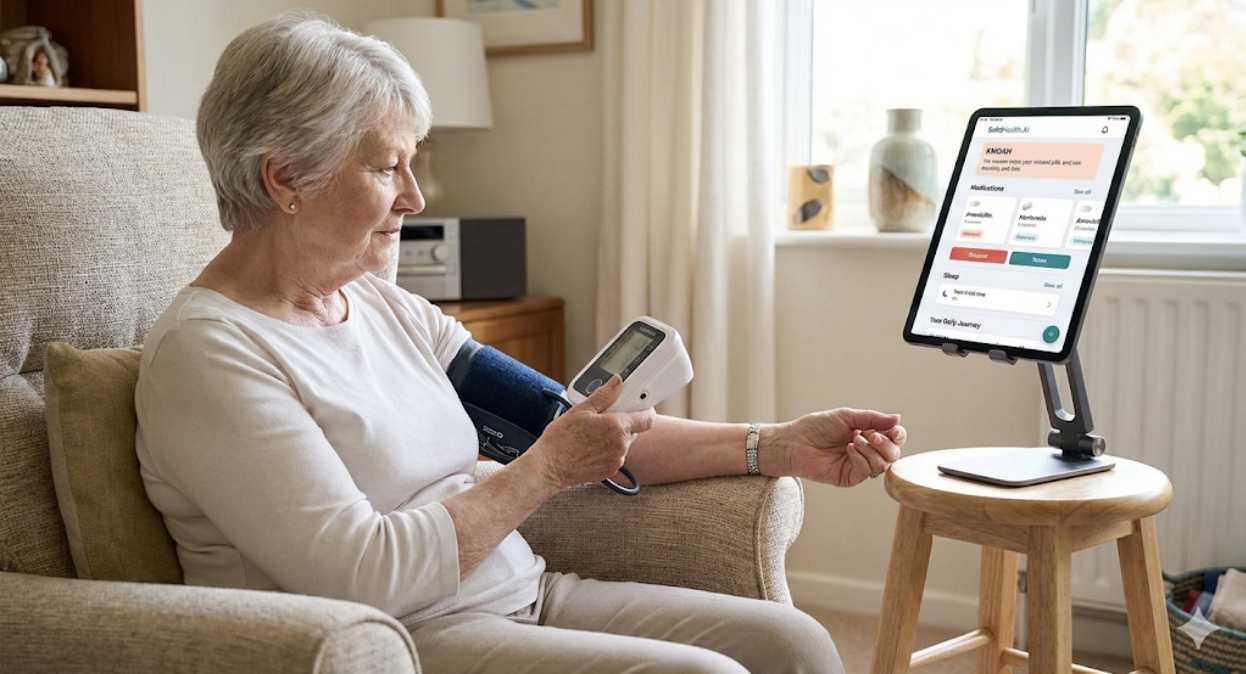
To stop the revolving door, we must shift from episodic snapshots of health to continuous visibility. We need to extend the care team’s reach into the home, not just to monitor, but to actively support adherence and intervene early.
This isn’t about hovering over patients; it’s about providing a digital safety net.
Tools for Adherence, Not Surveillance
We cannot hand a 75-year-old patient five new pill bottles and a stack of paper instructions and expect perfect execution. Clinicians need digital tools that turn complex care plans into manageable daily actions for the patient.
- Beyond the Pillbox: Smart medication adherence tools that provide reminders, track intake, and flag missed doses to the care team before a pattern forms.
- Guided Recovery: Digital pathways for acute-care patients that deliver the right education at the right time: “Today, your incision should look like this; if it looks redder, click here.”
When patients have the tools to understand what to do and why they are doing it, adherence transforms from a struggle into a solvable routine.
Proactive Intervention: Catching the Spark Before the Fire
The most exhausting part of a clinician’s job is reactive, crisis-mode medicine – dealing with the heart failure exacerbation at 3:00 AM because the warning signs were missed for a week.
Continuous connection allows us to move to exception-based management.
Instead of waiting for a crisis, smart systems can analyze daily biometrics (weight, blood pressure, symptom surveys) and identify subtle deviations.
- The Old Way: The patient gains 5 pounds in a week, notices increased swelling, tries to sleep it off, and ends up in the ER with acute decompensation.
- The New Way: The system notes a 2-pound gain on day two. It automatically triggers a ping to the care team. A nurse conducts a brief telehealth check-in, adjusts a diuretic dosage over the phone, and the crisis is averted.
Reducing the Burden by Improving Outcomes
It sounds counterintuitive: “Won’t monitoring patients at home create more work for clinicians?”
If done poorly, yes. But if done correctly, using technology to filter noise and surface only actionable insights, it creates vastly less work in the long run.
Every readmission prevented is hours of intake paperwork, diagnostic testing, and acute care management saved. Every prolonged recovery shortened is capacity returned to the system. This will also result in substantial positive impact to Healthcare Economics, a large topic in itself. Will cover that aspect in a subsequent post.
The ultimate tool for reducing workforce burnout isn’t just efficiency; it’s efficacy. It’s the profound satisfaction that comes when a clinician knows the plan they made is working, the patient is recovering, and they won’t be seeing them in the ER next month.
We have the technology to close the gap between visits. By doing so, we don’t just help patients heal faster – we give our exhausted workforce a chance to breathe.
Leave a Reply